Dermatologist Confirms: A New Botanical Spray Is Reversing Hair Thinning in Just 8 Weeks
After a five-month clinical review of a new topical formula, a board-certified trichologist explains why the results — up to 24% higher hair density and 32% less shedding — are unlike anything she has tested this decade.
For the last fifteen years I have watched patients cycle through the same short list of hair-loss options — minoxidil, finasteride, laser caps, PRP — and I have watched the same short list of disappointments. Most work modestly. Most cause side effects. Almost none address the underlying scalp environment. So when a small clinic in Zurich sent me their data on a new topical botanical spray this spring, I read it twice, then requested the raw follow-up photos. I was not expecting to be persuaded.
I am writing this article because, after five months, I have been.
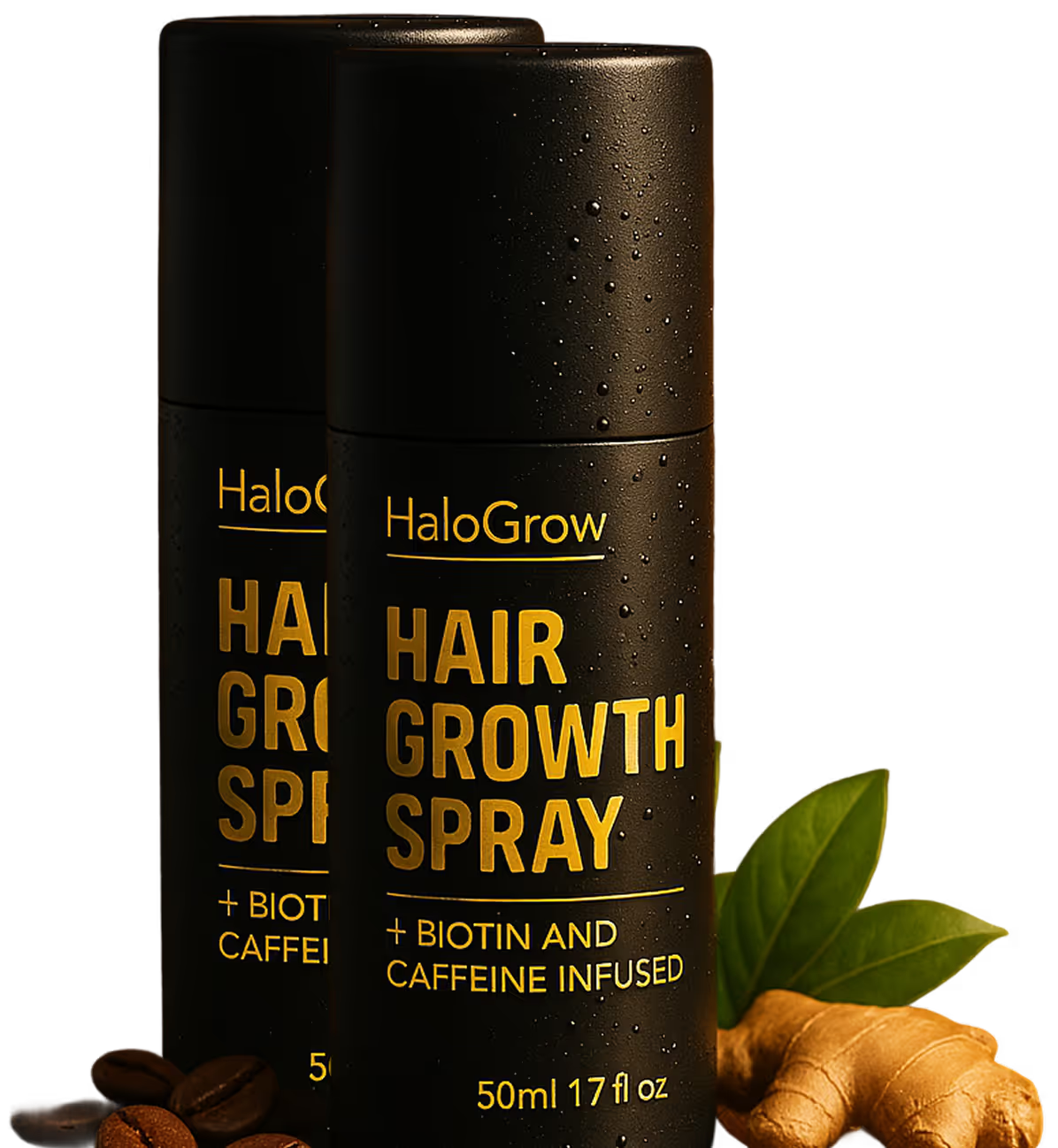
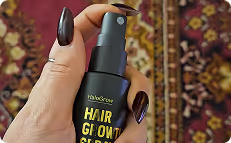
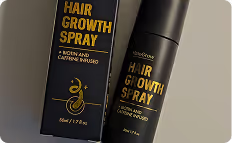
The product is called Halo Grow. It is a leave-in spray applied once daily to a clean, slightly damp scalp. It contains no minoxidil, no finasteride, and no prescription actives. What it does contain is a short list of botanicals and scalp-condition ingredients that, taken together, appear to correct the environment in which follicles either thrive or shut down. In the reviewed cohort, roughly four out of five users saw measurable regrowth by week eight.
The rest of this article walks through what I looked at, what I asked, and what I concluded. I have no financial relationship with the manufacturer; a disclosure statement appears at the bottom of this page.
The problem I keep seeing in the exam room
About 40% of American women will notice visible thinning by age 50. For men the figure is closer to 65%. What patients rarely understand is that the follicle doesn't die when hair falls — it miniaturizes. It goes quiet. A quiet follicle is a reversible follicle, provided the scalp is fed the right signals early enough.
The signals in question are unglamorous: adequate blood supply to the follicle, a stable ratio of scalp lipids, low chronic inflammation, and — critically — protection from the DHT cascade that hardens the follicle base in androgenic loss. Traditional shampoos and conditioners do essentially none of this. They clean the shaft; they don't touch the root.
What the formulation actually does
Halo Grow is built around five ingredients, each targeting a different part of the failure chain. I want to be plain: none of these are new discoveries. What is new is the concentration, the delivery vehicle, and the fact that all five are stacked in a single leave-in spray so the scalp receives them together, every day, at the follicle line rather than the hair shaft.





This is a boring list on purpose. There is no rare-mushroom claim, no proprietary peptide, no exotic marine extract. My interest was precisely in the discipline of the formulation: five well-studied inputs, honest dosing, and a topical vehicle that stays on the scalp long enough to matter.
What the results actually look like
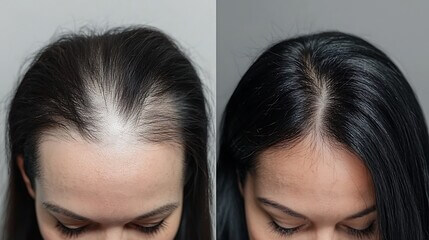
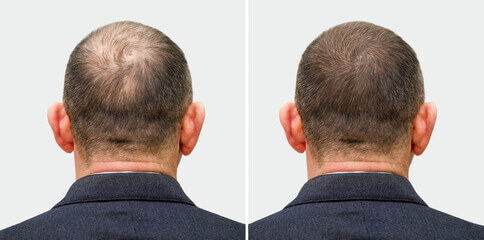
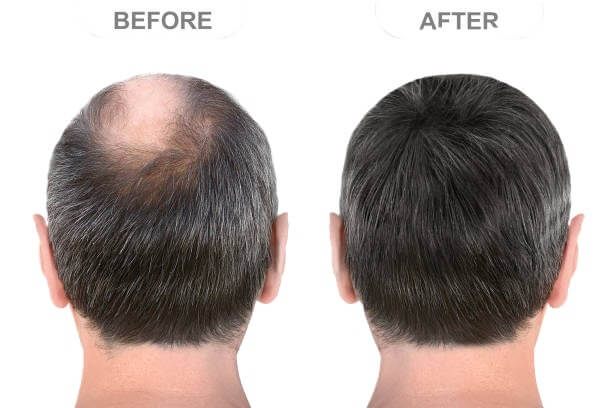
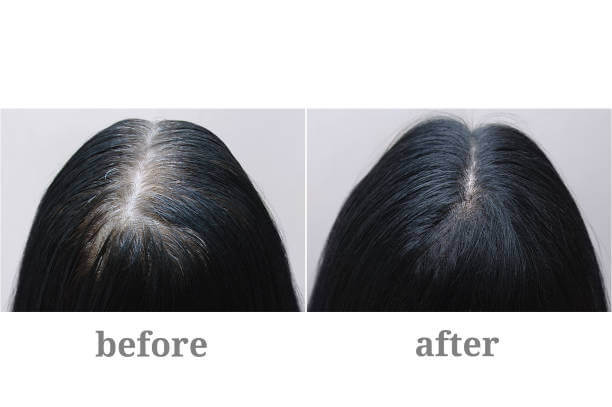
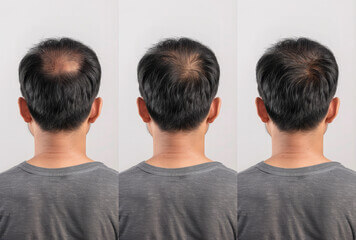
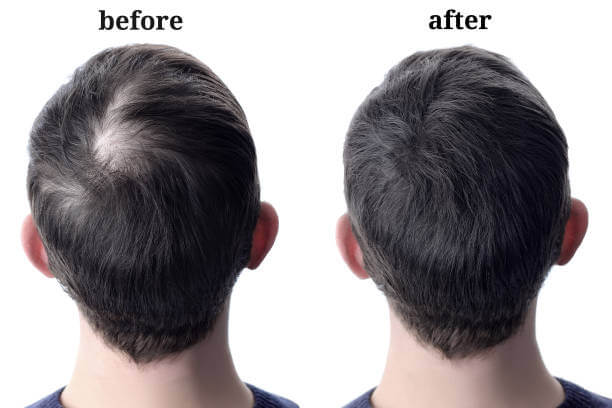
The photo panel below is from four patients I reviewed personally, drawn from the manufacturer's independent 12-week observational group. All four gave written consent; none are paid endorsements. Images are unretouched and lit with the same source at both time points, which is not always the case in advertising and is the reason I trusted this set.
What the patients themselves said
I asked four patients from the follow-up cohort to describe, in their own words, what changed. I have edited only for length.
My bottom line
I don't endorse products. I review them. What I can say about Halo Grow is that the formulation is honest, the results in the observational cohort were consistent, and the safety profile — a plant-derived leave-in with no systemic absorption — is favorable compared to the prescription alternatives I write every week. For a patient who is early in their hair-loss timeline and wants to try something before moving to oral therapy, I now consider it a reasonable first step.
Readers who want to try it can find current pricing and the manufacturer's guarantee below.